
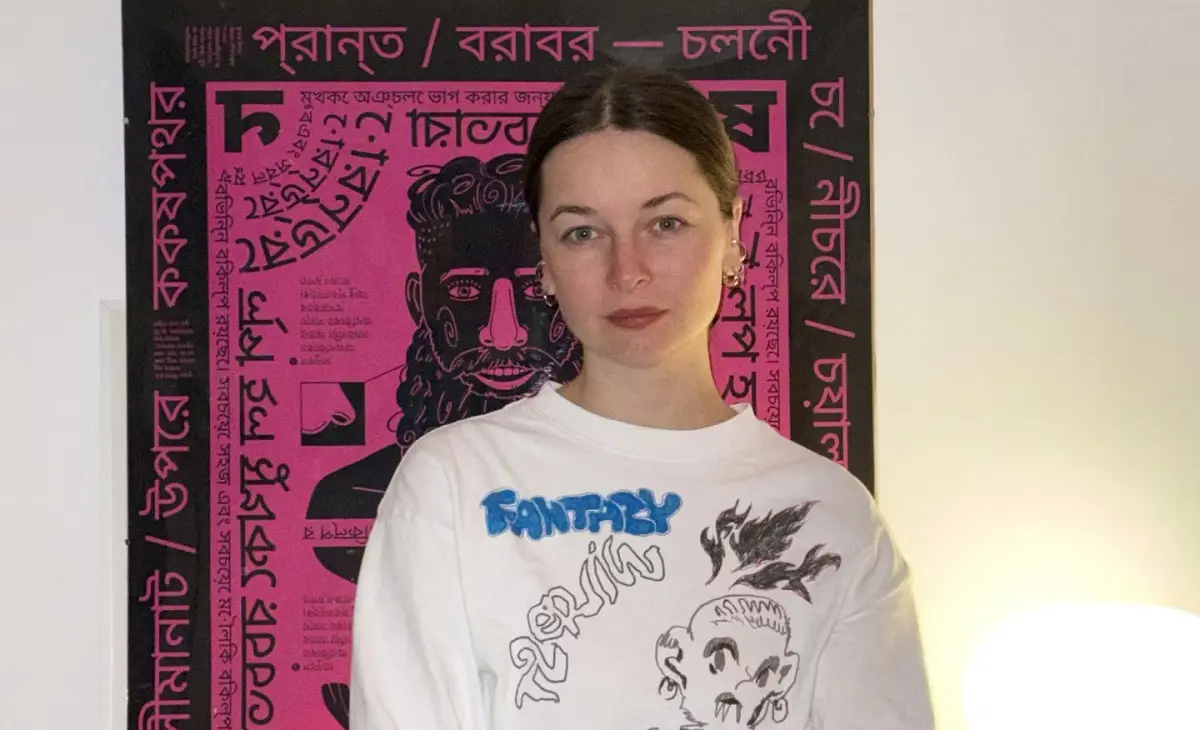
In conversation with Design Director Yuliya Ratnikova
At Ascend, our work starts before design begins – with noticing what others overlook.
Recently, our Design Director, , was featured in . Her perspective on the creative process in branding, leadership and curiosity reflects something we believe strongly as a studio: the most valuable ideas are often already there – they just haven’t been recognised yet.
Finding value in the overlooked
Yuliya’s inspiration doesn’t come from obvious places. It comes from everyday details: signage, systems, fragments of visual language most people pass without a second thought. Things that are functional, often imperfect, but quietly effective.
For the organisations we work with, that mindset matters.
Most are doing something new. Operating in unfamiliar territory, building ideas that don’t yet have a clear shape. The signals are there, but they’re often fragmented or hidden in plain sight.
Our role is to notice those signals, make sense of them, and lift them into something others can understand and believe in.
The creative process in – from chaos to clarity
The early stages of any project are rarely neat. They’re exploratory, uncertain, sometimes uncomfortable. But that’s where the most original thinking lives.
Yuliya describes this as ‘creative chaos’ – a space full of possibility, but lacking structure.
The challenge is to bring clarity without losing the edge. To shape ideas without flattening them. To turn ambiguity into something people can understand, trust and act on.
That’s where strategy and design meet – not as separate disciplines, but as part of the same process.
“Creative chaos… this is where ideas come from. It’s about giving space for ideas to happen while still guiding the work to where it needs to land”
The role of judgement
Good design isn’t just about ideas. It’s about knowing which ones to pursue.
That requires judgement – the ability to step back, remove ego from the process, and make decisions that serve the idea, the audience and the outcome.
As projects grow in scale and complexity, that judgement becomes even more important. It’s what allows a brand to evolve with confidence, rather than react or drift.
Holding onto the edge
In a world of faster tools and increasing automation, there’s a risk that thinking becomes compressed, that ideas are shaped too quickly, or too safely.
Yuliya’s view is simple: tools can support the process, but they shouldn’t define it.
The edge – that raw, unprocessed energy at the start – is often what makes a brand distinctive. Lose that, and everything starts to feel the same.
Building brands people can believe in
Whether we’re working in , , or , the challenge is often the same.
How do you take something new, something complex, unfamiliar or still evolving, and make it clear, credible and compelling?
That process always starts with noticing what others miss.
And more importantly, knowing what to do with it.
Because helping new ideas find their place in the world doesn’t begin with design. It begins with understanding.
Read the full interview on XXX
